By Dr. Gunjan Kapoor, Consultant Cardiologist
Heart attacks are no longer a problem limited to older adults. Cases are rising across all age groups — and in those first few minutes, the right actions can save a life.
Here’s a clear, practical guide based on medical evidence and first-aid best practices (explained fully in my latest YouTube video).
Recognize the Warning Signs
Act immediately if you notice any of the following:
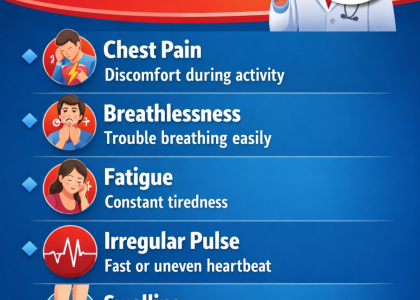
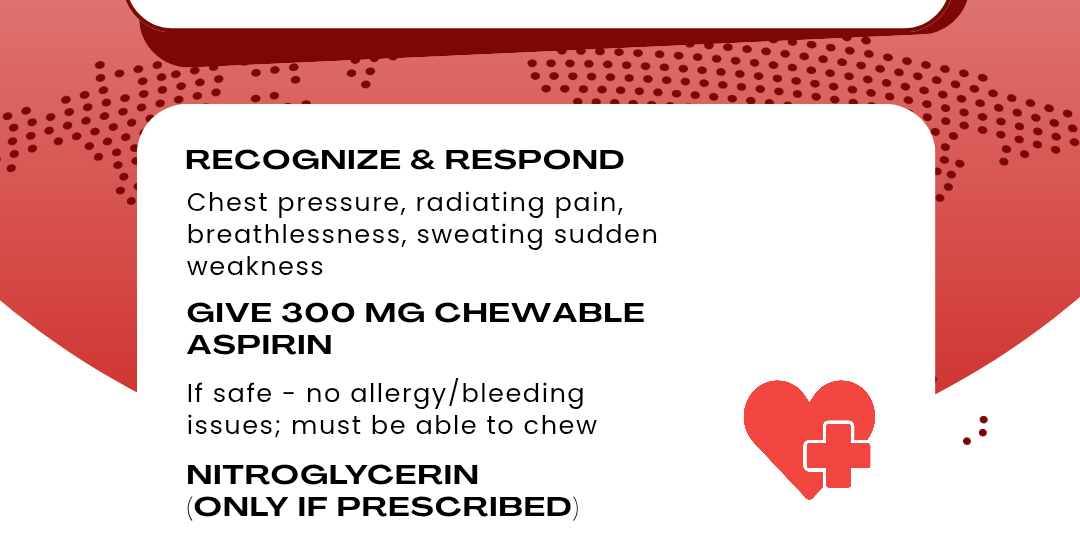
Chest pressure, heaviness, or squeezing
Pain radiating to the arm, jaw, neck, or back
Breathlessness, sweating, nausea, or dizziness
Sudden weakness or collapse
If you even suspect a heart attack, do not wait.
Call Emergency Services Immediately
Call your local ambulance without delay.
While waiting, keep the person calm and seated in a semi-reclined position to reduce strain on the heart.
Give Aspirin (If Safe)
A proven and effective first-aid step:
Give 300 mg plain, chewable aspirin
Make sure they can chew and swallow
Avoid if they are allergic, have bleeding disorders, active ulcers, or are on certain blood thinners
Chewing the aspirin speeds up absorption and helps slow clot growth.
Use Nitroglycerin (Only If Prescribed)
Nitroglycerin should be used only if:
It is their own prescribed medication
Their blood pressure is not very low
They have not taken sildenafil (Viagra) recently
Never give someone else’s nitrate medication.
Monitor Closely — Be CPR Ready
Stay with the person throughout.
If they become unconscious, stop breathing, or have no pulse, begin CPR if you are trained.
Use an AED if available — it will guide you step-by-step with voice instructions.
Avoid Giving Other Heart Medicines
Do not give Clopidogrel, Atorvastatin, or any other cardiac medications at home.
These require proper medical supervision.
Why These Steps Matter
Most heart damage happens within the first hour.
Early action — aspirin, quick ambulance response, and CPR when required — can dramatically improve survival and reduce long-term complications.
Be Prepared. Not Paralyzed.
✔ Learn these steps
✔ Keep chewable aspirin handy (after consulting your doctor)
✔ Learn basic CPR
✔ Share this knowledge with family and colleagues
A few minutes of awareness can save decades of someone’s life.