Every October and November, the air over Delhi NCR turns grey, and the cough, burning eyes and headaches begin. Most people think of smog as a lung problem. Doctors increasingly see it as a
heart problem too. Breathing polluted air does not only irritate your airways; it affects your blood vessels, your blood pressure and the way your heart beats.
What is in the smog?
The particles that matter most are
PM2.5: fine particles less than 2.5 micrometres wide, many times thinner than a human hair. They come from vehicle exhaust, construction dust, crop and waste burning, industry and, around Diwali, fireworks. Because they are so small, they travel deep into the lungs and some pass into the bloodstream. Gases such as nitrogen dioxide and carbon monoxide add to the load.
How polluted air harms the heart
Large studies from India and around the world link air pollution to more heart attacks, strokes, irregular heart rhythms and hospital admissions for heart failure. The likely mechanisms are:
- Inflammation and oxidative stress in the blood vessel walls
- Stiffer, narrower arteries and a faster build-up of plaque over the years
- Higher blood pressure and faster heart rate
- A tendency of the blood to clot more easily
- Rhythm disturbances in people who already have heart disease
The effect has two parts. A few days of very bad air can trigger an event in someone who is already vulnerable. Years of breathing polluted air raise the long-term risk of heart disease for everyone.
Why winter makes it worse
In winter, cold air makes blood vessels tighten and pushes blood pressure up, so the heart works harder. At the same time, cool still air traps pollution close to the ground, and levels often peak in the early morning and late evening. Together, these raise the risk of heart attack and stroke in the colder months.
Know your air quality
India’s Air Quality Index (AQI) is grouped as follows:
| AQI |
Category |
What it means for your heart |
| 0 to 50 |
Good |
Normal activity |
| 51 to 100 |
Satisfactory |
Normal activity; sensitive people watch for symptoms |
| 101 to 200 |
Moderate |
Heart and lung patients should limit long outdoor exertion |
| 201 to 300 |
Poor |
Avoid outdoor exercise; heart patients limit time outside |
| 301 to 400 |
Very poor |
Stay indoors as much as possible |
| 401 to 500 |
Severe |
Avoid going out; take extra care if you have heart disease |
The World Health Organization’s guideline for PM2.5 is far lower than levels often recorded in NCR in winter, so even “moderate” days are not risk-free for those with heart disease.
Who is at higher risk?
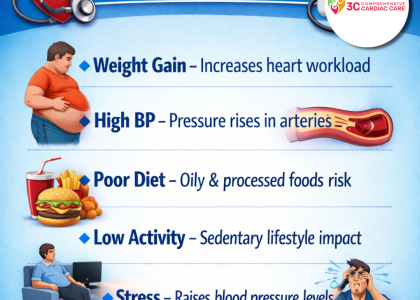
- People with existing heart disease, previous heart attack, stents or bypass
- People with high blood pressure, diabetes or high cholesterol
- Older adults
- People with heart failure or irregular heartbeat
- Smokers and people with lung disease such as asthma or COPD
- Pregnant women, children, and anyone who works or exercises outdoors
Young and healthy people are not immune. Read
Can Young Adults Get Heart Attacks? for more.
10 ways to protect your heart from polluted air
- Check the AQI before you step out. Use the CPCB or a reliable air-quality app, and plan your day around it.
- Move exercise indoors on poor-air days. Walk inside, use a treadmill or do light strength exercises instead of jogging outside.
- Wear an N95 or FFP2 mask when you must be outside. It needs to fit snugly over nose and mouth. Cloth and loose surgical masks filter fine particles poorly. If you have heart or lung disease, ask your doctor before wearing a mask during strenuous activity.
- Keep windows closed at peak pollution times and ventilate when outdoor air improves.
- Use a HEPA air purifier in the room where you spend the most time, usually the bedroom, sized for that room. A purifier reduces exposure; it does not remove the risk.
- Avoid adding smoke indoors. Do not smoke, and avoid burning incense, coils or waste. Use a chimney or exhaust while cooking. See Smoking and Your Heart.
- Never skip your medicines. Take your blood pressure, cholesterol, diabetes and heart medicines regularly, and keep a record of your home blood pressure readings.
- Stay current with your vaccines, including the yearly flu shot, if your doctor recommends it. Infections add stress to an already burdened heart.
- Eat a heart-friendly diet and drink enough water. Fruits, vegetables, whole grains and pulses support heart health. No “detox” food, drink or supplement removes pollution from the body, so be cautious of such claims.
- Do breathing exercises and yoga indoors. Gentle pranayama and relaxation help with stress and blood pressure, but avoid deep breathing exercises outdoors on smoggy days. Related reading: How Stress Affects Your Heart.
Warning signs: do not blame the smog
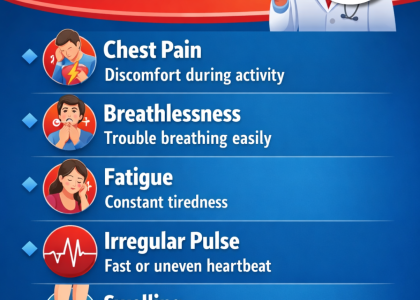
A smoggy-day cough is common. Chest symptoms are not always “just pollution”. Get urgent medical help if you have:
- Chest pain, pressure or tightness lasting more than a few minutes
- Pain spreading to the arm, jaw, neck or back
- Sudden breathlessness, sweating, nausea or dizziness
- A racing or irregular heartbeat with weakness or fainting
- Fainting or sudden swelling in the legs with breathlessness
Call 112 or your local ambulance service and do not drive yourself. To understand which chest pain needs attention, read
Is Chest Pain Always a Heart Problem?
When to see a cardiologist
Book a check-up before the winter peak if you:
- Already have heart disease, hypertension or diabetes
- Notice breathlessness, palpitations or chest discomfort that is new or worse in smoggy weather
- Are over 40, smoke, or have a family history of early heart disease
- Have not had your blood pressure, cholesterol and sugar checked in the last year
A basic assessment may include a blood pressure review, ECG, echocardiography and blood tests. See
When Should You See Your Cardiologist?
Frequently asked questions
Can air pollution really cause a heart attack?
Pollution is not the only cause, but studies show it raises the risk, especially during spikes and in people who already have heart disease or risk factors.
Is PM2.5 more dangerous than PM10?
PM2.5 is generally considered more harmful to the heart because it can reach deep into the lungs and enter the bloodstream.
Which mask is best for pollution?
A well-fitted N95 or FFP2 respirator filters fine particles best. A cloth mask does not.
Does an air purifier protect my heart?
A HEPA purifier lowers indoor particle levels, which can reduce exposure. It works best with closed windows and regular filter changes, and it is one measure among several.
Is it safe to walk in the morning in winter?
On days with poor or worse AQI, it is better to exercise indoors. On cleaner days, a warm-up and warm clothing help your heart cope with the cold.
Can I move away from the pollution?
Many people cannot, which is why reducing exposure and keeping blood pressure, cholesterol and sugar under control matter so much.
Which doctor should I consult in Greater Noida?
You can consult Dr. Gunjan Kapoor at 3C Comprehensive Cardiac Care for preventive and clinical cardiology.
Book a consultation
If you have heart disease or risk factors, a pre-winter check-up is a sensible investment. Visit
3C Comprehensive Cardiac Care, Shop No. D-35, 36, Omaxe ITC, Block 1, Sector Alpha-II Commercial Belt, Greater Noida, Uttar Pradesh 201308, or call
+91 94122 02063. Online consultations are also available.
This article is for general education and is not a substitute for medical advice. If you think you are having a heart attack, call emergency services immediately.