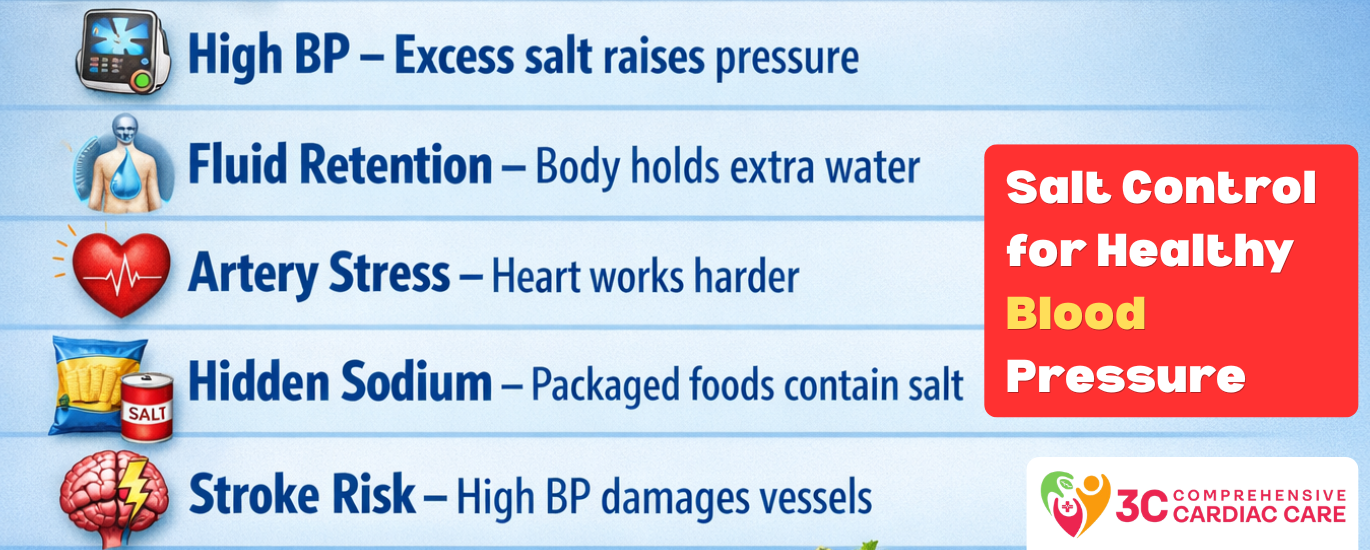
High blood pressure, also known as hypertension, is one of the most common health problems in India today. Many people are unaware that excessive salt intake plays a major role in increasing blood pressure. Because the effects develop slowly, hypertension is often called a “silent disease.” Understanding how salt affects blood pressure can help people make better lifestyle choices and protect their heart health.
What Is Hypertension?
Hypertension occurs when the pressure of blood flowing through the arteries remains consistently high. Over time, this increased pressure can damage blood vessels and make the heart work harder. If hypertension is not managed properly, it may lead to serious health problems such as heart attack, stroke, kidney disease, and heart failure.How Salt Affects Blood Pressure
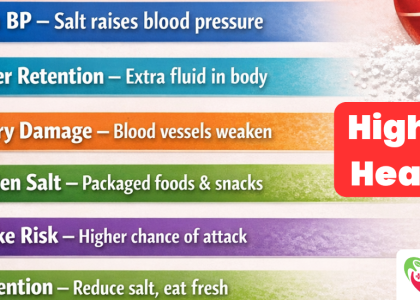
Salt contains sodium, which helps regulate fluid balance in the body. While the body needs a small amount of sodium, too much salt can cause the body to retain extra water. This extra fluid increases the volume of blood in the blood vessels, which raises blood pressure. Excess salt intake can lead to:- Increased blood pressure due to fluid retention
- Stress on the heart, making it pump harder
- Damage to blood vessels over time
- Higher risk of stroke and heart disease
Salt Consumption in the Indian Diet
Indian diets often contain higher levels of salt due to traditional cooking methods and packaged foods. Common high-salt foods include:- Pickles and chutneys
- Packaged snacks like chips and namkeen
- Instant noodles and processed foods
- Restaurant and fast foods
- Ready-to-eat meals
Recommended Salt Intake
Health experts recommend limiting salt intake to about 5 grams per day (around one teaspoon). However, many people consume much more than this amount without realizing it. Reducing salt intake can help lower blood pressure and reduce the risk of heart disease.Tips for Managing Salt Intake
Small lifestyle changes can help control blood pressure and improve overall health. Helpful tips include:- Cook food with less salt and avoid adding extra salt at the table
- Use herbs, lemon, and spices to enhance flavor
- Limit packaged and processed foods
- Read food labels to check sodium content
- Eat more fresh fruits and vegetables
- Stay physically active and maintain a healthy weight