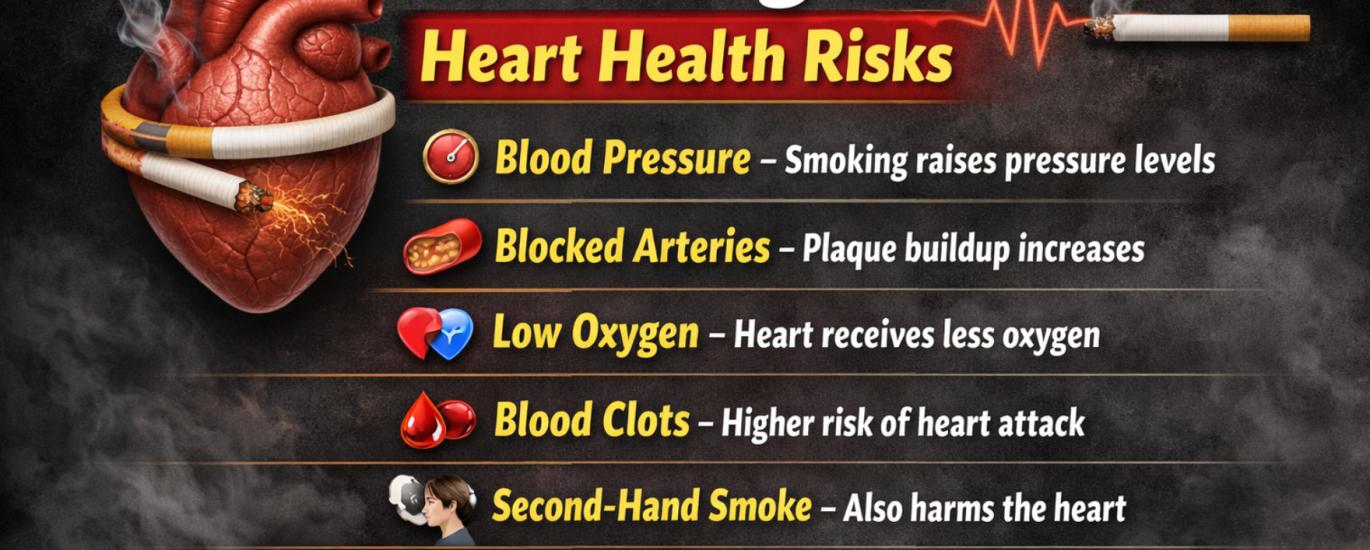
Smoking is one of the biggest risk factors for heart disease. Many people associate smoking mainly with lung problems, but it also has a serious impact on heart health. In India, increasing tobacco use among young adults and middle-aged individuals is contributing to rising cases of heart attacks and cardiovascular diseases.
Understanding how smoking affects the heart can help people make better lifestyle choices and reduce their risk of serious health problems.
How Smoking Affects Your Heart
When a person smokes, harmful chemicals enter the bloodstream and affect the heart and blood vessels. These chemicals damage the inner lining of arteries and make it harder for blood to flow properly. Some major effects of smoking on the heart include:- Narrowing of blood vessels, which reduces blood flow to the heart
- Increased blood pressure, forcing the heart to work harder
- Higher risk of blood clots, which can cause heart attacks
- Reduced oxygen supply to the heart and other organs
- Damage to artery walls, leading to blockages over time
Smoking and Heart Attack Risk
Smoking significantly increases the chances of a heart attack. Even occasional smoking can be harmful. People who smoke may experience:- Faster buildup of plaque in arteries
- Increased heart rate
- Higher levels of harmful cholesterol
- Reduced levels of protective cholesterol
Second-Hand Smoke Is Also Dangerous
Even if a person does not smoke, exposure to second-hand smoke can still affect heart health. Second-hand smoke can:- Increase the risk of heart disease
- Damage blood vessels
- Raise blood pressure
- Trigger heart problems in people with existing heart conditions
Benefits of Quitting Smoking
The good news is that quitting smoking can significantly improve heart health. Some benefits include:- Blood pressure begins to improve within weeks
- Heart attack risk gradually decreases
- Blood circulation improves
- Oxygen levels in the body increase
- Overall heart function becomes stronger over time
Tips to Quit Smoking
Stopping smoking can be challenging, but the right support can make a big difference. Helpful steps include:- Setting a clear quit date
- Avoiding triggers such as alcohol or stress
- Exercising regularly
- Seeking medical advice if needed
- Getting support from family or healthcare professionals