Choosing the right oils for cooking is crucial for maintaining heart health, especially when considering the traditional high-heat methods used in Indian cuisine, like deep frying, stir-frying, and sautéing. Not all oils are created equal, and understanding the types of fats and their impact on heart health can help you make better choices for your kitchen and your cardiovascular system.
Understanding Fats in Cooking Oils
Oils are primarily composed of different types of fatty acids, each affecting heart health differently. Here’s a breakdown of the main types of fats found in cooking oils:
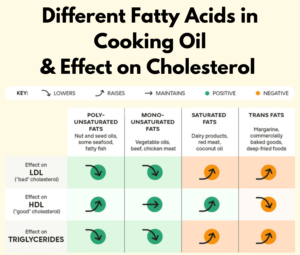
1. Saturated Fatty Acids (SFA)
Saturated fats have long been associated with raising cholesterol levels, particularly LDL (bad cholesterol). However, recent research shows that not all saturated fats are harmful. Short- and medium-chain SFAs, such as those found in coconut oil, do not significantly affect cholesterol levels and are more stable at high cooking temperatures.
2. Monounsaturated Fatty Acids (MUFA)
MUFA is considered heart-healthy as it can lower LDL cholesterol while maintaining or raising HDL (good) cholesterol levels. Oils rich in MUFA, like olive oil and mustard oil, are beneficial for your heart.
3. Polyunsaturated Fatty Acids (PUFA)
PUFAs are divided into two essential fatty acids: omega-6 and omega-3. Omega-6 reduces LDL cholesterol, while omega-3 helps lower triglycerides, blood pressure, and improves overall heart function. The ideal omega-6 to omega-3 ratio for heart health is between 5:1 and 10:1. Oils rich in PUFA can be heart-protective but degrade easily at high temperatures, making them less ideal for frying.
4. Trans Fatty Acids (TFA)
Trans fats are harmful and should be avoided. They are often found in hydrogenated vegetable oils like vanaspati ghee. TFAs not only raise LDL cholesterol but also lower HDL, significantly increasing the risk of heart disease and other conditions like diabetes and cancer.
Oils to Include in Indian Cooking
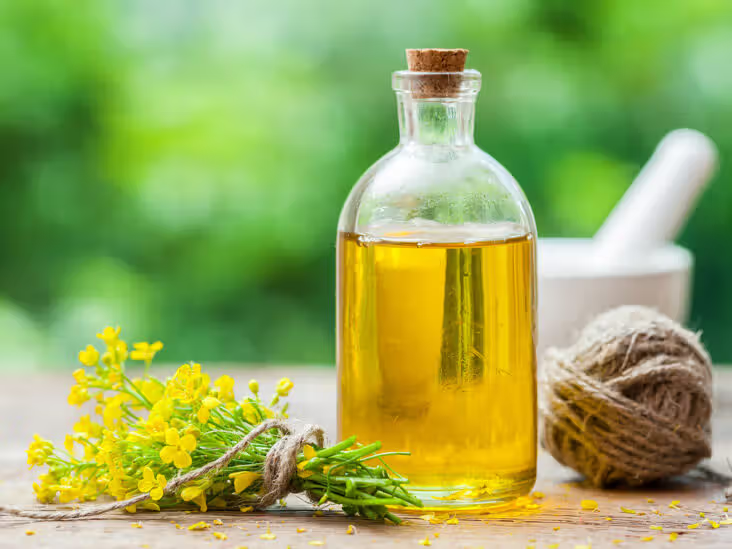
1. Mustard Oil
Mustard oil is a staple in many Indian kitchens and is one of the best oils for heart health. It is low in SFA, high in MUFA, and contains PUFA in an ideal omega-6 to omega-3 ratio. Its stability at high cooking temperatures makes it suitable for deep frying and sautéing, two common methods in Indian cuisine.
Best For: Deep frying, sautéing, and pickling.
2. Coconut Oil
Coconut oil is widely used in South Indian dishes. While high in saturated fats, these are primarily medium-chain triglycerides (MCTs), which research shows do not negatively impact cholesterol levels when used in moderation. It is highly stable at high temperatures, making it excellent for frying.
Best For: Frying, especially in South Indian recipes.
3. Olive Oil
Olive oil, especially extra virgin, is rich in MUFA and antioxidants. However, its omega-6 to omega-3 ratio and low smoke point make it less suitable for high-heat cooking common in Indian cuisine. Use it for dressings or light sautéing.
Best For: Salads, dressings, and low-heat cooking.
4. Groundnut (Peanut) Oil
Groundnut oil is a versatile oil commonly used for deep frying, stir-frying, and roasting. It is rich in MUFA and has a high smoke point, making it ideal for various Indian cooking techniques.
Best For: Frying, stir-frying, and grilling.
5. Rice Bran Oil
Rice bran oil is gaining popularity due to its high smoke point and balanced composition of MUFA and PUFA. It also contains antioxidants like oryzanol, which help lower cholesterol and improve heart health.
Best For: Deep frying and stir-frying.
Refined Oils vs. Unrefined Oils: What’s the Difference?
Refined Oils
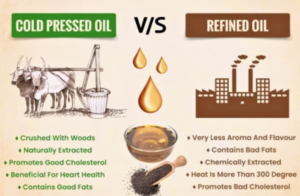
Refined oils undergo extensive processing, including high heat, bleaching, and chemical treatments to remove impurities and improve shelf life. This process strips away essential nutrients like vitamins, antioxidants, and healthy fatty acids. While refined oils are cheaper and have a longer shelf life, they are far less nutritious and can be harmful when used at high cooking temperatures, as they generate toxic compounds and free radicals.
Disadvantages:
– Nutrient loss during processing
– High levels of trans fats and degraded PUFAs
– May form toxic by-products during high-heat cooking
– Linked to higher risks of heart disease, inflammation, and other chronic illnesses
Unrefined (Cold-Pressed) Oils
Unrefined or cold-pressed oils are extracted mechanically without the use of heat or chemicals, preserving their natural antioxidants, vitamins, and fatty acids. These oils retain their flavor, aroma, and health benefits, making them a better option for heart health. While unrefined oils may have a shorter shelf life and be more expensive, they are far more nutritious and stable, especially when using oils like mustard and coconut oil for cooking.
Advantages:
– Retain natural nutrients and antioxidants
– Lower levels of harmful trans fats
– Safer for high-heat cooking when using oils like coconut and mustard oil
– Linked to improved heart health and reduced cholesterol levels
Blended Oils: A Balanced Choice
Blended oils combine two or more oils to improve their nutritional profile and stability. For example, blending rice bran oil with safflower oil or combining coconut oil with sesame oil can offer a balanced mix of fats and improve oxidative stability, helping reduce the risk of coronary heart disease (CHD).
Practical Tips for Using Oils in Indian Cooking
1. Use Oils in Moderation: Even the healthiest oils can contribute to weight gain and high cholesterol when used excessively. Measure out oil to keep portions controlled.
2. Mix and Match Oils: Use a variety of oils to benefit from different fatty acids. Mustard oil for deep frying, olive oil for salads, and coconut oil for traditional dishes can provide a balanced nutrient intake.
3. Avoid Reusing Oil: Reusing oil after frying can lead to the formation of harmful free radicals, which negatively affect heart health.
4. Choose the Right Cooking Methods: Baking, grilling, and steaming require less oil compared to frying, making them healthier cooking options for heart health.
Final Thoughts
In Indian cooking, oils are often subjected to high temperatures during frying and stir-frying. This not only destroys beneficial antioxidants like vitamin E and β-carotene but can also generate toxic compounds. Refined oils, especially those rich in PUFA, degrade quickly at high temperatures and should be avoided for frying. In contrast, oils high in saturated fats like ghee and coconut oil are more stable and can be used safely for high-heat cooking.
Oils like mustard oil and blended oils offer the right balance of stability and health benefits, making them ideal choices for Indian cooking. By carefully selecting oils and being mindful of how they are used, you can support heart health while enjoying flavorful meals.
Click here for previous blog